Episode Transcript
[00:00:00] Speaker A: Hi, everyone. The 2027 Global Ethics Summit is coming to Atlanta this spring, and in this episode, we'll get the inside scoop on what's on the agenda. I'm your host, Bill Coffin. Welcome to the Ethicast.
For the last two years, AI has shown up in nearly every conversation in ethics and compliance. ENC teams have written the governance frameworks, vetted the tools, and answered the board's questions. Some have gone on to put AI to work inside their own programs. Many haven't even started. And more than a few practitioners would be happy to go a whole week without hearing about AI at all. That's the backdrop for the 2027 Global Ethics Summit, Ethisphere's 18th annual gathering of ethics and compliance leaders, taking place March 30 through April 1 in Atlanta and online.
This year's theme is Human Centered AI Assisted. It's a framing that keeps people at the center of the work with the technology in a supporting role.
Every year, the summit brings together hundreds of senior ENC leaders in person and thousands more online, with more than 100 speakers and sessions built around what attendees can put into practice the moment they get back to the office.
And while AI will be part of the conversation, plenty of this year's agenda will have nothing to do with it.
So whether your program's already running, AI in production, still deciding where to start, or tired of the subject altogether, there's a lot to talk about.
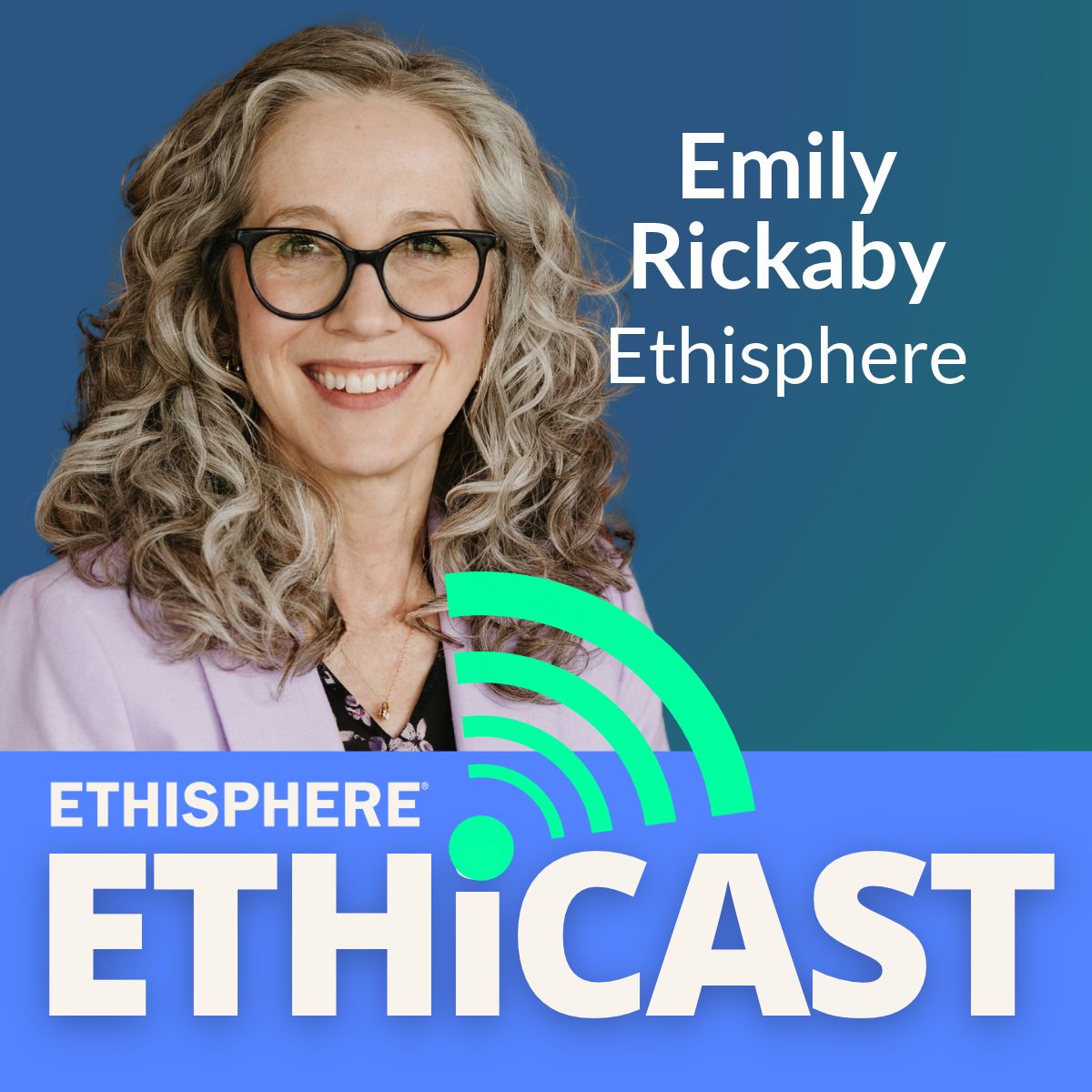
Here to give us an early look at the agenda is Emily Rickaby, vice president of content at Ethisphere. Emily works with Ethisphere's data and services team, members of the Business Ethics Leadership alliance, or bella, and ethics and compliance professionals across the field to develop Ethisphere's events and content. And she is at the heart of determining what what goes into the Global Ethics Summit each year. Emily, welcome back to the Ethicast. It's great to have you once more. And I believe the last time you joined us, you gave us a sneak peek at the upcoming summit. So, so glad that you can be here to do it again.
[00:01:57] Speaker B: Oh, Bill, it's my pleasure. I'm always happy to talk about the summit, and every year just so impressed with the people that come forward for our faculty and the folks here at Ethisphere who really make it, really make it sing and bring it all together.
[00:02:12] Speaker A: The theme for the 2027 Global Ethics Summit is Human Centered AI Assisted. How would you describe that and the way it captures the moment that the ethics of compliance discipline finds itself in right now,
[00:02:23] Speaker B: yeah, Bill, I think I would start with, you know, this is, this is still all about people created risk. And to quote you, people are going to people and they're still people. Right? And that's true whether you have an employee who is making a phone call to a client, or if that same employee has outsourced the drafting of all their client emails to an AI agent, We're still talking about people created risk.
And I think for compliance leaders, what's interesting about the time that we're in is it's not just that AI comes with its own distinct risks, Right. But it injects or shifts the risk throughout a lot of other risk domains. Right? So the point of that risk, the failure points, weak points, activities that many of the policies, processes and controls are, that are built to manage all of that, it's all shifting, right? Because the roles are shifting, the jobs are shifting, and you've got people still taking direct action, but also acting through agents. So you don't just have 10,000 employees, you have 10,000 employees times however many agents each one of those employees is deploying. Right. So, so the risk landscape is certainly impacted in really seismic ways with the use of AI. And another thing I think is interesting for compliance leaders at this time or with AI, and you can't escape it. It's so hard to escape it and keep it within context. But compliance leaders and their programs are built to put support mechanisms in place so that the business can continue to own and manage the risk. Right. If we think about the three lines model, but with AI being so encouraged and leveraged throughout organizations, compliance leaders not only need to build those tools to support the risk at the business level, but they also, their teams and their control partner functions are also playing such an active role in, in putting these endeavors to use in their own work. So I think it's, it's also a really unique time for our audience who will be at the summit.
[00:04:41] Speaker A: AI has been such a prevalent topic over the last 24 months or so, and this year in particular, I imagine that there are folks out there who might be facing AI fatigue as a subject. So how does this year's summit address that?
[00:04:53] Speaker B: Yeah, I think we're really attempting to put the focus, focus of our conversations back into broader perspective. Right. It's not just about a list of AI use cases or how are we selecting models or tool selection.
We want to go back to leading with the state of the risk area or best practices and emerging trends in a particular programmatic area to put AI back underneath that Back within context.
[00:05:24] Speaker A: One thing I've noticed in speaking with ENC leaders is that the maturity range of AI programs and governance within organizations is kind of all over the spectrum from nearly complete non use to advanced adoption. So has this year's summit and agenda and speakers approach such a wide range and still deliver something that's applicable to all attendees?
[00:05:43] Speaker B: Yeah, that's a great question.
I think looking at the 27 summit, I would point us to two sessions that sort of exemplify how we're trying to manage the range of maturity among the audience. Those sessions are on AI governance and AI accountability.
On our session on evolving AI governance, when we're talking about governance around AI, you can't just build the governance model and expect it to hold. There is no set it and forget it or set it and visit it once every couple of years. Right. You need to create a process or system that surrounds it so that it stays adaptable. And this is necessary to an organization no matter what their maturity is. Right. You've got to make this, make these considerations in order to have a governance model that is living, that can adjust as fast as your technology adjusts, as fast as your people's adoption of it adjusts.
The other piece of that is on accountability and defensibility. So we have a program taking a look at who answers for what your AI agent does when it gets it wrong. We can't just blame the bot. Right. That doesn't happen. Right. Gets back to my example of the 10,000 employees times so many other agents. Right. The company is still responsible. So what's the audit trail? What's the record of decision making?
Do you have the ability to defensively reconstruct what the technology did and why?
This also applies to any organization, regardless of their level of maturity. So those are a couple of ways that we're trying to bring everyone under the tent of these conversations and concepts, regardless of where they might be.
[00:07:34] Speaker A: There are definitely going to be attendees who simply don't want to hear about AI or who are going to want to learn about things beyond AI. So, Emily, what are some of the non AI highlights of the summit that we should pay attention to in this year's session lineup?
[00:07:46] Speaker B: Yeah, for sure, Bill. You know, I'm going to point to a couple of panel conversations and then also talk about a couple of programs in action that, that we are building out in conjunction with some of our BELLA members. So we're going to have a session that goes back to those ethical moments that allow Speak up to stay human.
Like we know that human beings like to report their concerns to other human beings. Right.
There's real value in those person to person moments.
That's where culture is built, that's where trust is built. And that in turn drives the success or failure of your speak up efforts. So how do you create those moments? What do they look like now? How do you ensure that those high touch human to human interactions are still happening?
Another thing we're going to look at is rethinking our use of champions. Right?
How do we rethink the deployment of those folks? What's the best use of them? You know, there's less of a need for them to share the information and the data because so much of that. Right. Is supported by technology.
So how do we make the best use of them? And that also ties into that human to human connection.
Do we have them focus more on developing that business level relevancy to the concepts that you're trying to communicate through your program? Do they focus more on storytelling, story sharing? So opening the door there to reconsider the best use of those folks and how they are embedded within the organization.
Another topic that's become a perennial one for us, this summit is talking about engagement with the board.
That is a moving target. It's always changing slightly, year to year, depending on what the risk profile looks like, depending on what the regulatory enforcement landscape looks like. Right. Depending on the headwinds that ethics and compliance leaders are facing in terms of justifying their own programs. So we're bringing that back to the main stage. So that's something that is very person to person focus because that really is all about relationship building. Right.
And then a couple of programs in action that I want to talk about.
So just a reminder for folks, especially if you haven't been to the summit in the last couple of years, or maybe not at all, when we talk about programs in action, these are sessions that are company led. So we've got our Bella member companies talking about innovations, restructuring, improvements that they've tackled within their own programs. How did they make it happen? Who'd they partner with? What kind of hurdles did you overcome? Right. Really getting into the nitty gritty of how they've made these changes in their programs.
So a couple of people are going to come forward with the more human focused concepts. So we'll hear from folks at bwxt and that session will focus on culture and relationship building.
How can compliance teams earn management trust, create a more candid work relationship with other business units within the organization?
How do they adapt their engagement approach to all of those maybe site level microcultures. Right. Without compromising standards or consistency. So that's really a lesson in emotional intelligence, I think, with that program in action.
And then we'll also hear from G.E. branova, who's going to share how they're redesigning their team to meet this moment, including how they're thinking about upskilling more junior staff.
Now that AI is doing a lot of the tasks that they normally would have used as job training moments. And I think this is something that we haven't heard a lot of people talk about, but is certainly impactful throughout the organization, really for many, many roles, is how are we making sure that those people are getting the foundational skills and sort of having those experiences that sort of sharpen them and get them ready for their next role within your organization. So those are just a couple of things that lean more on the human side that we're really looking forward to.
[00:12:01] Speaker A: So, Emily, you've talked about a lot of the different kinds of content they're going to be at the summit. I can say that having been to the summit a number of times, there's always a sense of shock and awe amongst attendees who are going to session after session. They're just amazed by what they've learned. They're kind of taking it all in. We've also, you know, when we poll attendees, I think last year, like 90% of attendees said that they took something they learned from the summit and put it in use once they got back home.
Do you have any recommendations for how attendees can start to kind of bounce the ideas that are percolating in their head off of, you know, their fellow attendees while they're, while they're at, at the summit. Because it's such a great peer networking event as well, I imagine there's a lot of opportunity for people to take what they just learned in the session, share it with their colleagues in the space, and have an even more enriched worldview once they go home?
[00:12:48] Speaker B: Yeah, absolutely. So I would say within the summit experience itself, especially those who are on site and in person, we are really making a conscious effort this year to build in bigger breaks so people have a little opportunity not just to connect with other people, but to just digest what they just heard. Right. You know, we're, we get so excited sometimes and there's so many people that we want to highlight where we can really get that agenda rolling. And it's bam, bam, bam. It's just packed. Right. But we also know, speaking of keeping it human, that everybody needs A little moment to just pause, take in what they learn, make some notes, make sure that you've got the contact information for that speaker that did the program in action or the two folks you saw on that panel or before you leave your table, you are having a conversation with someone. Make sure you connect to give people that time that really is necessary to have you take this in at the more gut level so it's not just flying right over your head. Right.
So that is one way.
And of course, post summit, those panel conversations are still going to be available. Right. We're doing as much as we can to try and build an archive of the content that you saw at the summit so that you can go back and revisit it. You can go pull up a written recap and you're like, what did they say again?
What was that point? Oh, yeah, that's who I wanna reach out to now. And it also makes it easier for you to share with your teams once you get back home.
[00:14:27] Speaker A: Well, Emily, thank you so much for joining us today and for giving us a look at what's in store in Atlanta. I can't wait to see you there. I can't wait to see the content. I can't wait for all of it. So thank you so much.
[00:14:36] Speaker B: Oh, thank you, Bill. It's my pleasure. And I'm excited to be there in person as well.
[00:14:41] Speaker A: The 2027 Global Ethics Summit takes place March 30 through April 1 in Atlanta and online. It's three days of practical sessions, plus time with years working through the same challenges that you are. Last year, 90% of attendees said they left with something they could use. So to see the agenda and register a visit attendges.com and if your organization is a member of the Business Ethics Leadership alliance or Bella, you're eligible for complimentary passes to the summit. Visit attendges.com to find out how you can claim yours. We hope to see you there.
That's all for now. We hope you've enjoyed the show. For new episodes each week, subscribe to us on YouTube, Spotify and Apple Podcasts. Also follow Ethisphere on LinkedIn to learn more about how we help organizations like yours make themselves more successful and more resilient by advancing business integrity. Thanks for joining us. And until next time, remember, strong ethics is good business.