[00:00:00] Speaker A: Hi everyone. In this episode we'll learn how global real estate company JLL uses a data driven approach to make and measure the impact of its ethics and compliance program. I'm your host, Bill Coffin, and this is the Ethic.
When meeting with the Board of Directors, ethics and compliance leaders often have little time to share the progress of their program or the impact that program is making on the broader enterprise. Program initiatives can be complex and long term, while opportunities to inform the Board often are short in duration and infrequent. This is where the Power of Data comes in at the 2026 Global Ethics Summit, which will be held in Atlanta, Georgia this March 30th and 31st. One of the very first mainstage sessions of the entire conference is a panel discussion entitled Speak the Language of the Board with Data Driven Stories.
That discussion will cover how companies are using data to create engaging board presentations and materials, including how to highlight your program's impact through data, how to effectively share KPIs and initiative outcomes, and how to craft a narrative that puts all of this information to its most compelling effect.
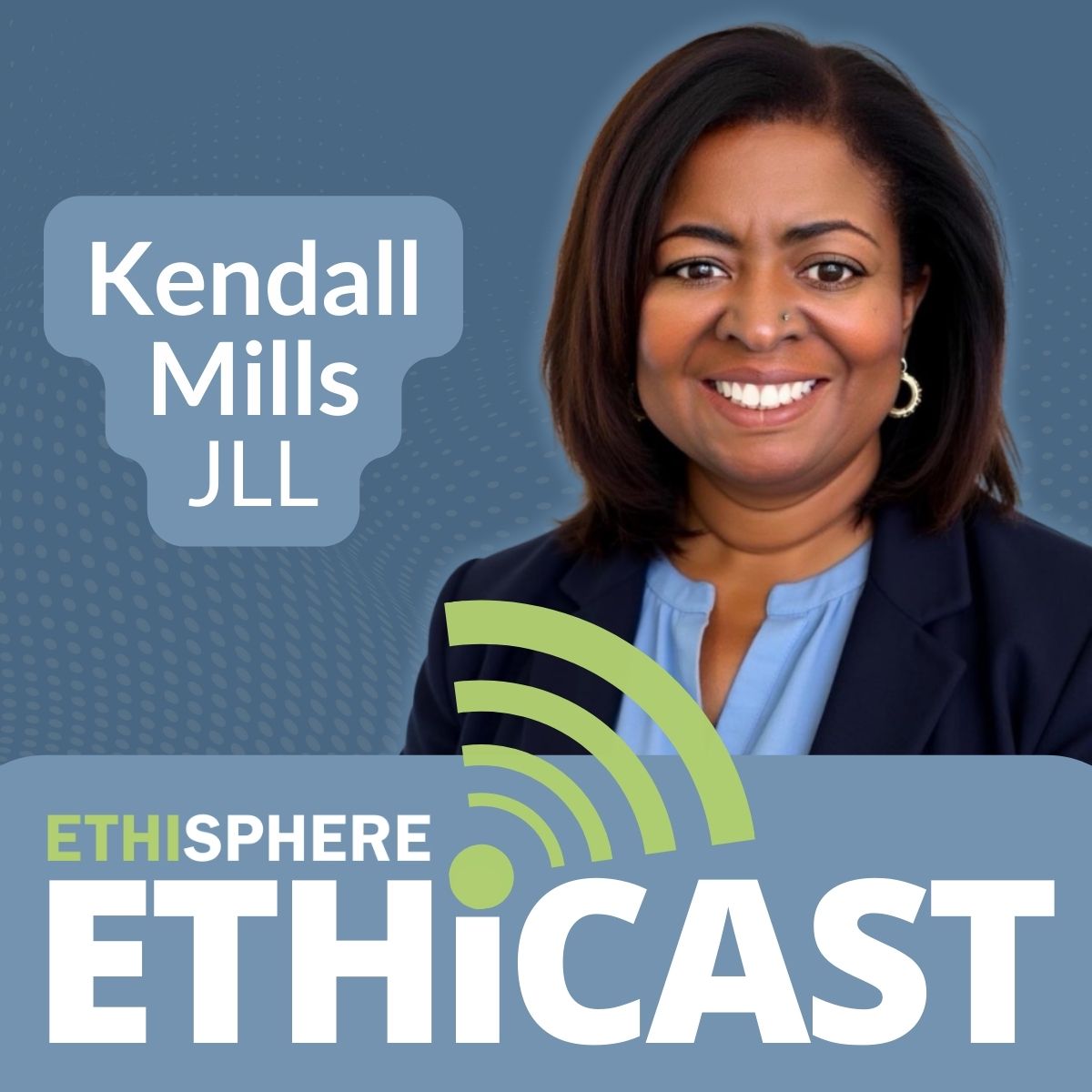
With us today to share her insights on the power of data driven ethics and compliance work is Kendall Mills, Head of Ethics and Compliance Americas for Global real estate services company and 18 time World's Most Ethical Companies honoree. JLL Kendall will join her colleagues from Metra Tech, amgen, Circana and AT&T when she participates in Speak the Language of the Board with Data Driven Stories at the Global Ethics Summit. Kendall, welcome to the Ethicast. Thank you so much for joining us.
[00:01:46] Speaker B: Bill, thank you so much for having me. I'm very excited to be here.
[00:01:51] Speaker A: Can you talk about the internal and external forces that have encouraged JLL to focus on data as a critical driver for its E and C strategy and operations?
[00:02:00] Speaker B: Yes.
From an external perspective, I think JLL is in the same position as most companies where we understand that there are regulatory expectations for increased data literacy and compliance programs. I think most of us are familiar specifically with the DOJ's 2024 evaluation of corporate compliance programs that really pushed companies to leverage data analytics for things like monitoring compliance risk and identifying trends and red flags and testing efficiencies, et cetera. From an internal perspective. As far as what drives us to data driven strategies, there is almost from the time I started at JLL and I know you and I were joking about how it used to be Jones, Lang, lasalle officially and now we're at jll, but almost at the time that I started, we developed our own internal technology company Called JLL Technologies, which we shortened to jllt.
And JLLTT delivers technology services to clients, but it also provides advanced technology internally. So we have a ton of data tools available to us just by virtue of working at a company that has a technology and company inside of it.
Now. JLL's market differentiation strategy emphasizes being future ready through technology and AI.
Our ethics and compliance team is integrated into JLL's global data strategy. So that not only acts as a driver for us, but it also really empowers us to expand our use of data analytics in the ENC space.
[00:03:51] Speaker A: Well, I'm interested in learning more about how you built JL's ENC data story. So can you offer an example of how your data driven approach to E and C and especially your work with JLLT has advanced how your program reduces risk and builds value for the enterprise?
[00:04:07] Speaker B: Yeah. So first I would say that, you know, when we talk about our data story, I feel like we're very early on in the book. We have lots of chapters yet to be written when you think about the way data accessibility is broadening along with responsible AI usage. So one thing that we did was we started with just sort of going back to the beginning. We started with basic reporting on risk and investigations using primarily benchmarking.
Then we added data specialists to our team primarily on the risk space. But we recognized that we still had room to grow from a reporting standpoint with reporting and training and those capabilities.
So what we did, we came to a crossroad last year when we had an opportunity to hire a day to day person responsible for the ethics and compliance function. And we had to make a decision on whether we were going to hire somebody who was especially trained in ethics and try to teach them data analytics, or whether we were going to hire somebody trained in data analytics and, and teach them ethics. And we went with the latter. And what that really has allowed us to do is to start thinking about data from a deeper perspective. You know, how do we create a data infrastructure? We're talking about things all the time like data warehousing and building rooms in those data warehouses that will allow us to use anonymized data from other parts of the the organization to create layered data. And with that layered data, we'll be able to use those tools to do a lot more than sort of tell the past story, but to also predict the future. So I think some of what the data and even thinking about data has allowed us to do is sort of think about where we're going from in the future along with what we've done in the past and sort of be a little bit more directed about where, where we're going and what we expect to see.
[00:06:36] Speaker A: Kendall, how have you measured the impact of this data driven approach and have you seen the ways in which you measure that impact change over time?
[00:06:44] Speaker B: You know, we've significantly invested in the data, so some of it has just been, has changed from the, the addition of more tools, you know, greater ability. I think where we started, and I alluded to it a little previously, was we started with, we would get a good benchmarking survey and we would, you know, pull up our numbers as it compared to the benchmark and we would sort of say, oh, we're higher or lower, you know, compared to the benchmark. And you know, that was pretty good for the time. You know, you always have to give yourself a little grace of, you know, you did what you did at the time and you grow as the ability to grow presents itself. And so what data has allowed us to do is it's allowed us to move beyond surface level metrics and really go deeper. One example would be the training data.
For instance, we would look at now we have data that can tell us, you know, who completed all their training across all of the organization. And we are in, I think right now a little more than 85 countries. So we couldn't do that without data.
We can see who's completing their training at what level. And now because we've partnered with our HR team, we're able to see how that training is impacting our organization.
Now one thing interesting I think we've learned and I think it's really easy for us as ethics and compliance professionals to fall into this trap. We think, hey, if everybody gets trained, everybody's going to be ethical and it's all going to be wonderful. And you know, we're going to think everything is perfect. And what we saw in certain areas is sometimes either a business line or country with the best training rates don't have the best results on the people survey, which is our survey that our hr, our team does. And so we have to go back and what the data has allowed us to do is presented us with an opportunity when we see that to say, okay, what's going on here? Is it a cultural thing? Is it a business like thing?
How do we have to then change how we're providing training to better meet those folks who are taking the training? But it's not clicking. So I think that's one way that measuring data has really helped and it's really evolved our program by really allowing us to get deeper insights that aren't sort of where our biased thinking may take us.
[00:09:32] Speaker A: I imagine that a lot of ENC leaders would love to incorporate into their program the things that you're doing now at jll. So what recommendations do you have for leaders who want to really incorporate data into their own ENC strategy and operations?
[00:09:48] Speaker B: Well, first I would say, you know, just jump in. If you're not using the data, get started and you don't have to, as I always used to hear that phrase go, you don't have to boil the ocean. First, start with what you have in enc.
Every ENC team has a ton of data. They have investigations data, they have training data.
They are building risk data. So collect what you have, organize it, and really categorize it systematically.
I would also say pay attention now as you're building your data program to data integrity, because in the future that will make a lot of difference. You want to be able to go back and look with confidence at the numbers you're developing now in the future.
The other thing I would say is if you're not benchmarking, find a good, good benchmarking data. Find something reliable and compare your data to the benchmarks, because that will start to tell you a lot. You know, I think if you're maybe in a smaller organization and you're not benchmarking, an example might be, you think, oh, we don't have a lot of ethics concerns, so we have an ethics environment. And I think what you learn through the benchmarking is actually having ethics concerns raised leads to people feeling comfortable raising those concerns. So it's a little, not as intuitive as people might think. So get a good benchmark so that you understand sort of how to look at ethics data. The other thing is, and I alluded to this earlier, is building just a strong data infrastructure. You know, invest time in developing that, make sure you have good data integrity and good data hygiene, and then collaborate with other folks in your organization. We're at a place where there's so much information. You can partner with hr, who has tremendous amount of information, and you can do some data cleansing so that you maintain the confidentiality of that data, but you can really layer that data to get strong insights.
It wouldn't be a conference or an interview in, in 2026 without talking about AI, right? So use AI responsibly because know the.
The goal is always to use AI, and it's helpful for trend analysis and insights and to determine where you have gaps, but just make sure that you use that responsibly. And you know, now, Bill, and I promise I'm not just using flattery because I'm on the program, but I'd say reference the Bella resources, especially if you have to do board presentations. You know, one of the best things about being a part of the Bella community is that you don't have to reinvent the wheel. We have a lot of resources from companies that are doing the same thing that you're doing that are talking about the same thing. And if you tap into those resources, it will really help set you on the right path without a lot of the trial and error that you might go through if you're trying to do it on your own. And then finally, I would say just go beyond presenting numbers. You know, it's great when you pull a lot of data and you just sort of put it all on paper and you say, here you go, here's all of what's going on.
But especially in a board context, people need to understand what that data means. So make sure you provide strong analysis that you've researched and that you have gotten a foundation on what those numbers mean. And like I said, just if you're not doing it yet, get started is probably the last thing I would really say.
[00:13:58] Speaker A: Well, Kendall, this has been a fantastic conversation. Thank you so much for joining us today and for sharing your insights with the ethics and compliance community. We really appreciate your presence.
[00:14:08] Speaker B: Bill, it has been an absolute pleasure. Thank you again for having me.
[00:14:12] Speaker A: To learn more about the great work that Kendall and her colleagues at JLL are accomplishing, visit jll.com where you can download a copy of their Ethics Everywhere annual report.
Personal note I have read it. It is a fantastic document. I really recommend everybody who's watching this episode check out the Ethics Everywhere report. It's a great piece of material. And to see Kendall speak at the Global Ethics Summit, be sure to register today for an in person or virtual
[email protected] flights and hotel rooms are booking quickly, so move fast to reserve your place at the most impactful and data driven ethics and compliance conference of the year. Thanks for joining us. We hope you've enjoyed the show. For new episodes each week, be sure to subscribe to us on YouTube, Apple Podcasts and Spotify. And if you haven't already, please follow ethisphere on LinkedIn as well to learn more about how we help organizations strengthen, advance and improve their ethics and compliance programs. Together, we can make the world a better place by advancing business integrity.
That's all for now. But until next time, remember, strong ethics is good business.