Episode Transcript
[00:00:00] Speaker A: Hi everyone. In this episode we'll take a look at how radically increasing the transparency of investigations can advance your organizational culture of ethics and accountability. I'm your host, Bill Coffin. Welcome to the Ethicast.
Investigations are one of the trickiest aspects of ethics and compliance.
We hear from ENC leaders all the time who are looking for ways to improve their process, get better results, and most of all tie any given investigation to their larger effort of developing a true culture of ethics. It's not an easy task, but this is an area where innovation is producing some really interesting results. And today we're going to look at one of them.
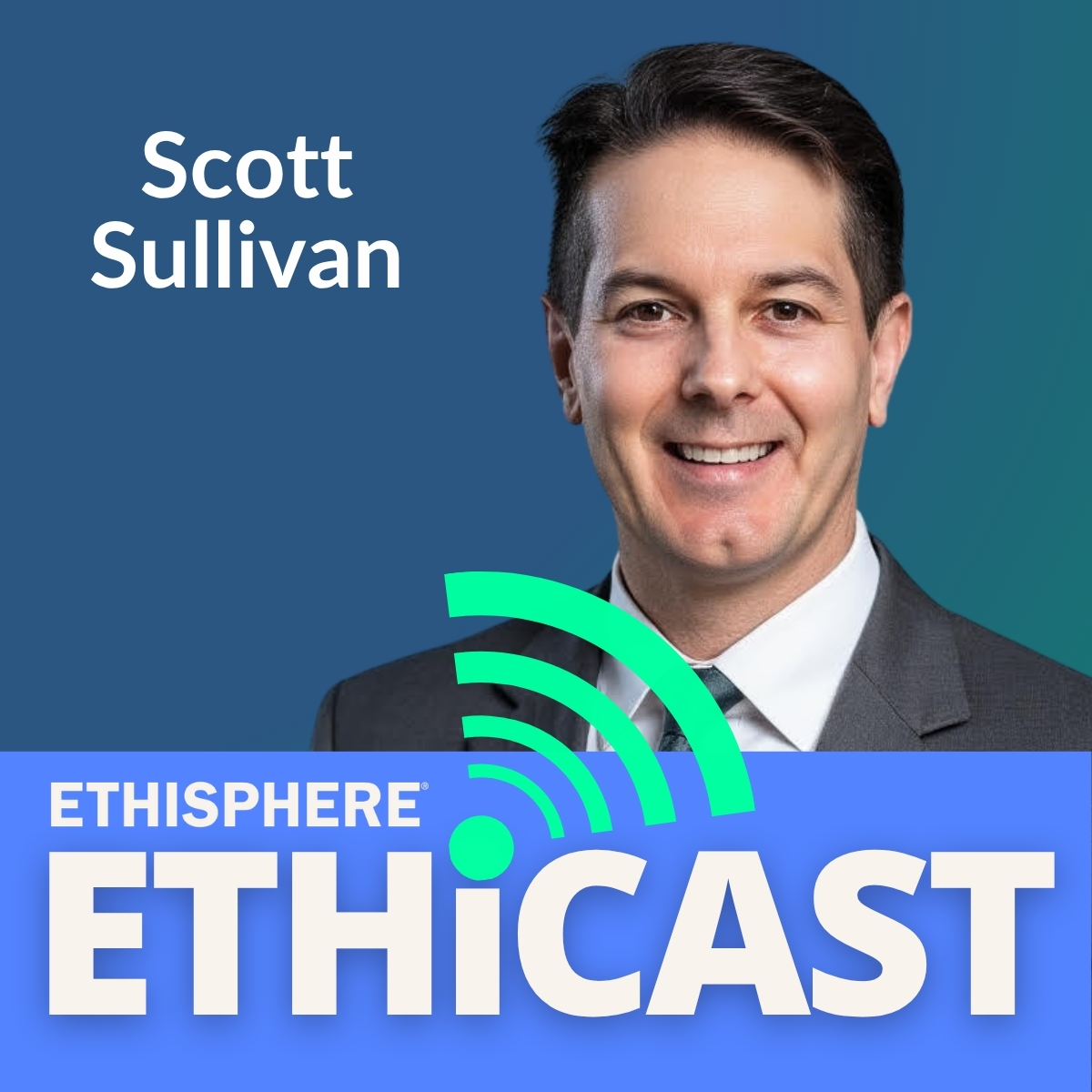
Our guest today is Scott Sullivan, who was most recently the chief integrity and compliance officer of Newmont Corporation, the world's largest gold mining company. Scott, thank you so much for joining us.
[00:00:59] Speaker B: Pleasure to be here, Bill. Thank you.
[00:01:01] Speaker A: Scott, you did some pretty impressive work at Newmont around transitioning the organizational culture from focusing on safety shares to values moments as a way to promote extreme openness in your investigations process. Can you talk about what prompted that transformation and what challenge or opportunity you were solving for?
[00:01:19] Speaker B: Sure. So I think back in early 2021, when the Rio Tinto report came out on workpl behaviors, all the mining industry knew that they had similar issues going on given the nature of the operations and sort of the fly in, fly out operations that were there. And so we as well decided to sort of jump in and figure out how do we solve this issue, how do we really work to ensure that the workplace is safe for everyone.
And so that was probably the kickstart. We had been working on it previously, but that was really brought everything front and center of how to sort of get going on that challenge.
[00:01:57] Speaker A: So in what way were you like kind of lifting the hood on your own investigations process here?
[00:02:02] Speaker B: So one of the things we thought about was really instead of the sort of wash, rinse, repeat cycle continuing, where you sort of have a case, the same thing happens and you kick it down the road, kick the can down the road.
You know, we really thought what could we do differently to try to have a different outcome? Because the sort of definition of stupidity is doing the same thing over and over again and expecting a different result.
And so we really tried to lift the hood on both the process and sharing the outcomes with as much detail as possible. So there were clarity of expectations for people and they really understood what was happening. Because a lot of times, as you know, the investigations black hole takes over and people don't understand the process, it becomes archaic, it becomes confusing. People are out to get someone. So it was really an opportunity for us to address some of the core issues, but at the same time really focus on the process and sharing that transparently with the organization.
[00:03:01] Speaker A: But it also seems like there was an interest here in making sure that bad actors weren't simply just finding their way outside the organization and repeating their mistakes elsewhere.
[00:03:11] Speaker B: Yeah, certainly a challenge with data privacy concerns, litigation concerns, but one of the issues that emerged pretty quickly out of the Rio report and some other research that was done was when somebody would be engaged in sort of significant bad personal conduct, they would be exited from the organization. Unless you were really a CEO or somebody where it was in the glaring spotlight, what would happen is you'd be exited from an organization. You go quiet for a little bit of time and then you'd resurface somewhere. And many times those perpetrators would commit the same offenses again at other organizations. So one of the thoughts were, how do we in terms of corporate social responsibility, it's not an easy issue to solve, but how do you think about making sure that we're not simply kicking a problem from one organization to another?
[00:04:00] Speaker A: Now, when you underwent this whole transformation, it's my understanding that you saw a pretty substantial increase in reporting. How did you kind of measure the results from this in a way that made sense to you and how did you dashboard it all?
[00:04:13] Speaker B: Yeah, so it was probably over a three to four year period, probably a 385% increase in reporting that's based on public of it publicly available data.
And really what we thought about doing was how do we continue to drive the reporting up so everybody has speak up culture. We also wanted to make sure the onus was not simply on an aggrieved party, but it was also on leadership.
So we kind of transformed our culture from speak up to Ask, Listen, act, which was really moving the onus to the manager or the leader to make sure he or she was sort of wandering about to understand what was going on in the organization. It wasn't simply sitting back waiting for problems or issues to come to that individual. So it was really much more of putting the burden, if you will, on management and leadership to go out and find issues before they metastasized into something larger.
We certainly did scorecards for the executive team and the board, which are very well received. They became models for some other committee work that was done.
We made sure that we had the one source of truth system. So a lot of organizations will have all these data points coming into different spots. So at one point in time you might have 65% of the data or 70%. So we wanted to have as much as we could in one spot so you could give the most accurate, reasonable figures and data and statistics. And then for the organization itself, on a quarterly basis, we developed something called the ogid, which was the Organizational justice and Integrity Dashboard, which was a two pager, sort of had data, some stories and some lessons learned, et cetera, that could be brought all the way down to the front line for toolbox talks, up to board and executive level conversations. Just reminding people the things that had happened in the organization and not simply the generic something happened to Bobby. Somewhere, someplace, sometime when you had that
[00:06:10] Speaker A: initial bump in reporting, how much of that do you think was sort of like pent up demand that could have gone back, you know, on issues that extended back months or even years. And was there a period of time after which you saw reporting kind of decrease to what felt like a more usual level?
[00:06:25] Speaker B: Yeah, so at the time, sort of the spike was sort of directly up. Right. And that started to plateau. But then the company did a sizable acquisition. So that did open up the opportunity for people to sort of get a second opinion, if you will. And they also had to align with our reporting standards, standards and norms, et cetera, about what is done and what was where. So one thing we did was within the organization, we created an in out document. So what is in and supposed to go into the helpline, regardless of where it came in, and then what things, regardless where it came in, should not be in the helpline. So an employee relations matter might be kicked out to hr. A safety issue that was not about hiding or concealing a normal steady state day to day safety issue. Just because it came in the helpline doesn't mean we would handle it so it would be processed out to the organization's safety function.
[00:07:20] Speaker A: Now a big piece of this is getting top leadership on board. And as I understand it, you had senior leaders who were very much supportive and ready to go for all this. But for chief compliance officers and for secos who might need to do a little bit more convincing internally, they how would you recommend that they approach making such a major transition like the one you did?
[00:07:39] Speaker B: Yeah, it is a huge cultural transformation issue. So we were very fortunate to have fabulous leadership. They got it. You know, one leader shared a story about remembering when we were publicizing some details and taking some litigation and data privacy risk, publishing case details internally and a limited number of cases externally, that these individuals did it to themselves. To themselves. And the organization didn't do it to them. And we have to think a lot of times as an organization for practicing 25 years, I just saw so many times where when somebody does something egregious, serious and bad, we worry about them and what they might do or say as they exit Instead of the 99.999% of the people that remain that are trying to do the right thing. So we really tried to shift the focus to that 99% plus of the organization and not so much contend with the concerns that would come from an individual who did something pretty significant or pretty bad.
[00:08:39] Speaker A: Yeah.
What internal allies did you gather when you were undertaking all this?
[00:08:45] Speaker B: So certainly the CEO critical, the Chro, the chief legal officer, chief operations officer was critical as well. And then getting the support and, and sort of the blessing of the board was critical as well. It's so much easier to have the top down sign off. You still have to do all the legwork below within the organization, but you don't want to be rowing upstream against that. And so you really had to get people comfortable that there weren't going to be 1,000 lawsuits, there weren't going to be a ton of human rights complaints or data privacy concerns. And at the end of the day, when you're talking serious, egregious, intentional, willful misconduct.
So most of those offenders did not want their information to become public in some sort of a legal proceeding. So they typically would go away.
[00:09:35] Speaker A: When you and I first discussed this topic, you said something very interesting to me about culture, namely that organizational culture can be a relatively cheap thing to approve in advance if you have guts, and of course, if you have the right support.
So in light of what we talked about already, can you offer some thoughts on that, not just around investigations, but around that intestinal fortitude it takes to establish a culture of ethics.
[00:09:58] Speaker B: So I think it's really, really important to recognize it does not take a ton of cash to do something like this. It really is a directional shift, a cultural shift. There's usually some sort of incident or issue that gives rise to the thought process for the leadership team about how should we handle this differently? Instead of the wash, rinse, repeat.
But when you have that issue, latching onto that issue, and if you're able to demonstrate the sky doesn't fall with the path that you're proposing, it makes it a lot easier. Now, I would say the first one is probably actually the easiest. It's the second, third, fourth case that you have to stay the course because the employees are looking for do your words and deeds match. And is this just a one off, they had to do this, et cetera, or is this truly a cultural transformation or a cultural shift in the way that we're doing things?
[00:10:52] Speaker A: What is the really satisfying element of what you do in ethics and integrity and compliance that makes you want to stay in this line of work and gives you reason to go? You know what, this is not something I have to do, but this is
[00:11:03] Speaker B: something I get to do. Yeah. So I think it's probably the impact you make on people in the organization. So me, my sort of philosophy is innovative, integrity, human centered and AI augmented. So that's in the last couple years, obviously with the growth of AI, but it's not losing the human element. So whether you're in an investigation, so if you're in an investigation and you get people that are the subject of the investigation thanking you for the professionalism, the fair treatment, etc. That's like holy grail stuff. Right. And so when you're able to do that and sort of really support the organization, so you know, always the compliance, here's the compliance team, they're going to, you know, drop a ton of things, then fly the coop or here's corporate, I'm here to help you in the field, the eye rolling begins. So really sort of humanizing yourself as a leader, as a compliance functioning team, it makes such a difference in what people tell you, what comes forward. And for the organization, it's early warning radar. It allows you to address problems before they become really serious or go externally. And I think from a human perspective, particularly getting HR buy in, if you can intervene early, you can save, salvage, rehabilitate. And any HR professional will tell you sort of the full employee cycle of recruiting and onboarding and training. And then if you're exiting somebody from misconduct, you have to redo that. The cost in dollars and cents and time and energy is enormous. So if you can intervene early where there's a course correction instead of constantly pushing people out of the organization, I think it's a huge benefit and you feel good because you're making a positive impact on people's careers.
[00:12:45] Speaker A: Well, Scott, this has been a really cool conversation. Thank you very much for joining us and for sharing your thoughts on innovation and transparency and investigation and culture. It's been really enlightening and it's been really wonderful to hear you talk about it. How can people best connect with you directly to continue this conversation?
[00:13:01] Speaker B: Sure. And thank you, Bill. Great, great opportunity. So LinkedIn is probably the best place to get me these days, and happy to chat and share war stories and experiences and any advice I can give.
[00:13:12] Speaker A: For a host of free resources around best practices in investigations, Speak up and ethical culture, visit ethisphere.com and check out our Resource Center. And for our latest thought leadership, blogs and feature stories, head over to our Insights section. That's all for now. We hope you've enjoyed the show. For new episodes each week, subscribe to us on YouTube, Spotify, and Apple Podcasts. Also, follow at the sphere on LinkedIn to learn more about how we help organizations like yours make themselves more successful and more resilient by advancing business integrity. Thanks for joining us, and until next time, remember, strong ethics is good business.