[00:00:00] Speaker A: Hi, everyone. In this episode, we'll look at how the team at Guardian Life Insurance launched their ridiculously successful compliance newsletter and what you can learn from it. I'm your host, Bill Coffin. Welcome to the Ethicast.
Communications is something that many E and C teams struggle with.
No matter how mature an organization's ethics and compliance program is or how advanced its culture of integrity may be, winning hearts and minds is still tricky business. And that's to say nothing of the task of getting everyone on the same page when it comes to a company's compliance policies, procedures and protocols. Enter Guardian Life Insurance, a 165-plus-year-old Mutual Life Insurance company based in Manhattan. Guardian Life offers a wide range of insurance products and services, including life insurance, disability income insurance, annuities, investments, and dental and vision insurance coverage.
Guardian's ethics team recently launched a compliance newsletter that by newsletter standards, has delivered some incredible audience interaction. And today we're going to talk to the folks behind it, how they developed it, and what you can learn if you're thinking of launching an internal compliance newsletter yourself.
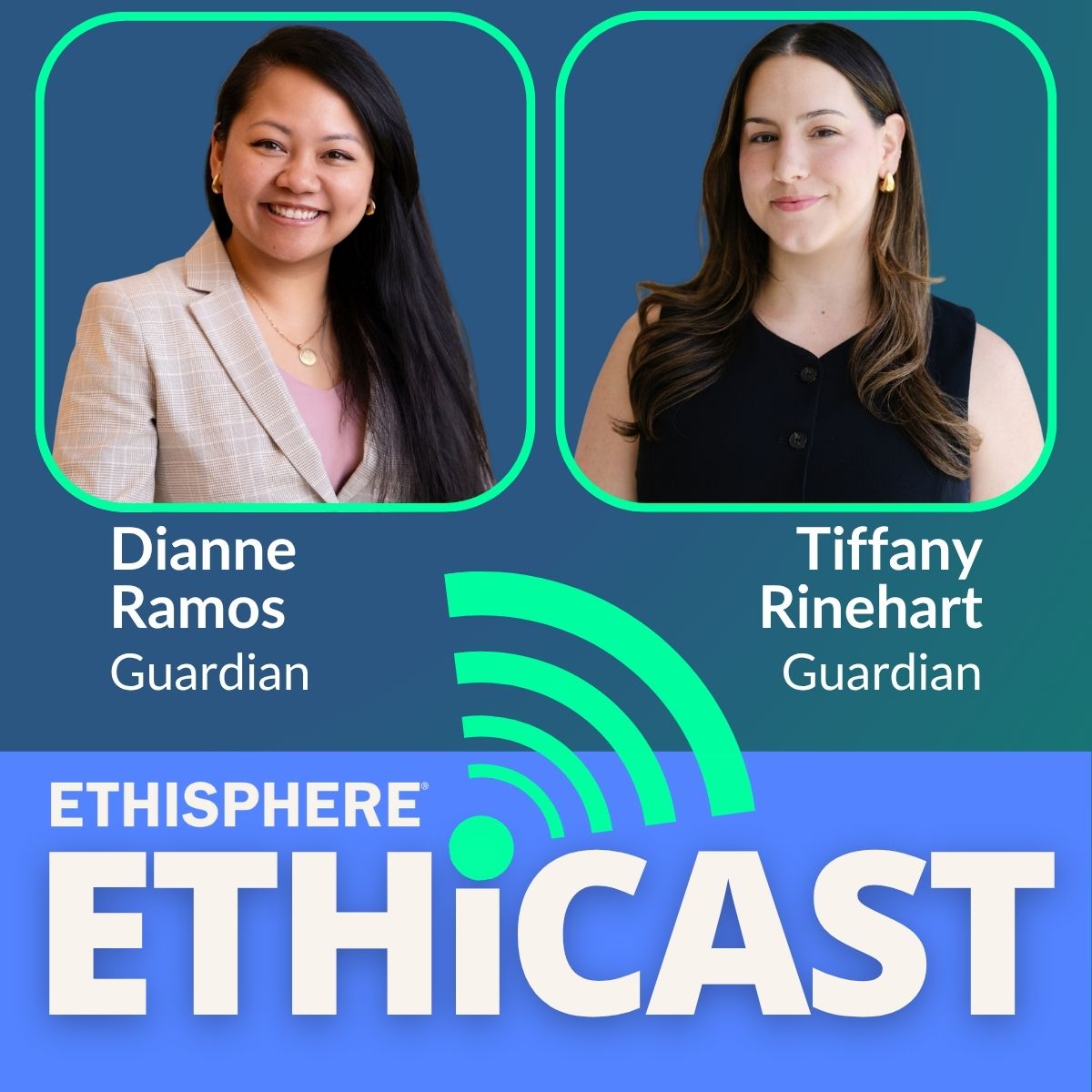
And now it's my pleasure to introduce our guests for this episode, Diane Ramos and Tiffany Reinhart. Diane is head of ethics at Guardian. She she is a people first leader focused on developing scalable AI first strategies, developing talent, and fostering collaborative environments where people feel empowered to do their best work. Diane, welcome back to the Ethicast. It's great to have you on the show once again.
[00:01:37] Speaker B: Thanks for having me again, Bill.
[00:01:40] Speaker A: Tiffany is head of finance and risk and legal communications at Guardian Life. Tiffany is an internal communications and employee engagement leader known for translating business strategy into clear, actionable narratives. She is a trusted advisor to executive leadership, shaping communications that drive alignment, reinforce priorities, and strengthen organizational culture. Tiffany, thank you so much for joining us.
[00:02:01] Speaker C: Thanks for having me. I'm happy to be here.
[00:02:04] Speaker A: Diane, what inspired you to create an ethics compliance newsletter and how did you go about getting support to pursue this? I mean, a lot of E and C teams talk about creating a specific newsletter, but then they realize it's actually a lot harder to get one of these off the ground than it looks.
[00:02:18] Speaker B: Yeah, it's a good question, Bill.
What inspired us was a very simple belief. Transparency builds trust.
We asked colleagues to speak up, to raise concerns, to trust the process all the time. But we felt it was important for us to demonstrate that same transparency ourselves.
In fact, the title of our first newsletter was called you asked for transparency. So we'll go first.
Like you said, from the beginning, we knew this wasn't going to be Easy that the level of transparency we were aiming for required SECO advocacy, then thoughtful conversations with a number of stakeholders, including human resources and employment counsel, among others.
This also was just not a compliance initiative. It required deep alignment and coordination with communications.
So we openly acknowledge that. That sharing more information comes with risk. Information can be misunderstood. It can be taken out of context. But we believe that the greater risk was remaining silent and missing an opportunity to strengthen trust in our ethics program.
So rather than viewing those concerns as obstacles, we approached them collaboratively. We showed stakeholders exactly what we intended to publish and why it mattered and how we were going to communicate it responsibly. And we couldn't have done that without the partnership from Tiffany, my communications partner.
[00:03:48] Speaker C: Yeah, and I think from a communications perspective, we have a lot of newsletters. There's a lot of information going out all the time.
So we heard colleagues say, this is what they want from us, and we really wanted to provide that. But how do we provide that in a way that's, like, thoughtful and when they need it?
So we. What we tried to do here is capture colleagues feedback by keeping it simple, snackable, like, it's what they need when they need it a few times a year. So, like, and I was able to fight for it as a communicator because, yeah, we have a lot going on. Why does this matter? Well, number one, colleagues ask for it, and number two, we're only doing it when it makes sense, which feels more organic and just better for our communications flow.
[00:04:32] Speaker A: Well, Tiffany, I'd love to learn a little bit more about how you determine what content makes it into an issue. Like, I understand that your issues are thematically driven, so how do you decide what is worthy of an issue and what isn't worthy of an issue?
[00:04:44] Speaker C: Yeah. So I think similarly, again, we have four sections in our newsletter, so typically it starts with a letter from the chief ethics officer, Then we go into some kind of infographic.
One thing we learned is that real life stories really resonate with colleagues. So we have a real life story that we always include, and then we have some quick, like, reminders and just how to speak up section as well, just so colleagues have that information.
But we really try to, like, keep it aligned with those things. So when we start, we're not building from scratch. We're, like, filling in the boxes that we know we need.
[00:05:16] Speaker B: It's really about stories and storytelling, and our stories always start with a theme.
So we look at emerging trends, we look at evolving trends, and like Tiffany said, what questions are we hearing? From across the organization.
Sometimes we're responding to patterns that we're seeing, and other times we're trying to get ahead of an issue before it actually becomes a problem.
And we can't say this enough. We spent a lot of time listening, we conducted focus groups, we reviewed feedback, and we asked colleagues directly from what topics do you need more guidance on? Some of our most impactful stories have been inspired by real situations that our folks have actually encountered.
[00:05:57] Speaker A: Diane, your engagement rate through your newsletter is simply incredible. I'll leave it to you to share the numbers, but as someone who produces newsletters himself, I would absolutely kill for your open rates. So can you talk about why the response to a newsletter has been so positive? And I guess, more importantly, how do you intend to maintain such a robust level of audience engagement?
[00:06:19] Speaker B: Yeah, no pressure, right? We're very. We're very, very proud of our open rate.
I think we're averaging 84 to 85% click rate and open rate for our newsletter. I actually just pinged Tiffany right before this podcast because we just issued our third edition of the newsletter a few days ago, meaning yesterday and day two, and we have a 79% open rate. So we are extremely, extremely proud of that.
But this also wasn't just an overnight sort of development.
Prior to launching the Integrity Report, which is our newsletter, our chief ethics and compliance officer and our chief risk officer spent significant time throughout 2024 meeting directly with colleagues and conducting road shows and town halls. And in those town halls, we used real life guardian scenarios and interactive exercises via Kahoot to create engagement and open a dialogue. And those conversations generated tremendous engagement. And that was actually valuable insight into what our colleagues actually wanted to hear from us. And one of the clearest indicators that the messages were landing was the action that was being taken by our colleagues after those roadshows. So after those roadshows, we saw something like a 500% increase in the number of unique disclosures that our colleagues were making and roughly 283% increase in the total number of disclosed items in just that year alone. So that told us that colleagues weren't just listening, they were taking action.
And we basically carried that same philosophy into our newsletter. Rather than leading with a policy language, we. We led with the stories, the situation, and the lessons learned. And Tiffany, feel free to add too.
[00:08:08] Speaker C: Yeah, I think also for us, we have tried to make it like, I think Dan alluded to this earlier, but like, you asked for transparent, we asked for transparency. We'll go first. So, like, catchy headlines. We also have an ethical mascot, Milo, who is a cute little pup.
And you know, he. We have a section called Dig Deeper with Milo, which is, that's where we feature like a real world scenario. And, and we feature him throughout the newsletter in many parts, but, like, trying to make it really engaging so it resonates with our colleagues. And again, just leaning on that, like, easy to read, you can skim it in two minutes, but you're like, you know, wow, this is information I didn't know I wanted, but I'm happy I have it and it makes me feel safe and I think that resonates with people.
[00:08:52] Speaker A: Diane, in what way would you say that this newsletter is part of a larger strategy to communicate and to connect with the employees at your company and to make them feel, I guess, really dialed in to the ethics compliance program?
[00:09:04] Speaker B: Yeah, it's a great question. So our goal at the onset was never to just create a newsletter. Our goal has always been to create trust. The newsletter just became one of the ways we chose to build it. So it's not a standalone communication tool. It's one component of a much broader culture strategy.
We know that to build an environment where colleagues feel comfortable speaking up, asking questions, and seeking guidance, people need three things.
They need to believe, three things that we're listening, that concerns can be raised safely, and that appropriate action follows. And our newsletter helps reinforce each of those messages.
I think we've said it many times in this epic cast. We did a lot of listening. And another important extension of that listening strategy is our Ethics Champion network.
So these are the colleagues that serve as our trusted ambassadors within their own teams and function. And we use them to help us understand local perspectives. They provide feedback on upcoming newsletter content, and they help us ensure that our message resonates across the different parts of the organization. And all of this together is what helps us create a continuous dialogue between the ethics program and the colleagues that we serve. Anything to add to that, Tiffany?
[00:10:22] Speaker C: Yeah, I think from a communications perspective, it's really about balance, right? Like with our Speak up program, the Integrity Report is like one spoke of that, you know, program and I think it's really trying to create balance.
We don't, we have a multi channel approach. We want to meet colleagues where they are across a lot of platforms, but we don't want to do too much so like really trying to like, do more impactful communications. And this is one of those.
So we've literally like looked at the whole year, looked at what we're doing and making sure across all of the different Channels we have, we're not doing too much. So that way it really, like, the things we do do, resonate with people more.
[00:11:00] Speaker A: Well, Tiffany, now that you're in the publishing racket, and welcome, what's one of the most surprising things that you've learned about the process and the payoff of doing this kind of work and, you know, especially unfolding it into within the ethics compliance program?
[00:11:13] Speaker C: Yeah. So, I mean, I love what I do. I'm very happy to be a communicator, but I think for this, I had to really fight for this newsletter. Like, people, we. Again, we have so many newsletters. People were like, for what reason? Like, why is this? Why does this matter?
And after it came out, so many people were reaching out to us, and we're so excited about, like, the content we were sharing. Like, not even people, you know, you get feedback from your colleagues, but, like, people from other teams. Just general colleagues who know who we are. We're like, hey, I love this newsletter. This is really fun. I'm so glad you did that. And like, this was really. I'm new to Guardian and I loved hearing about this stuff. And this, like, made me feel really safe and like, that, to me was so, like, I know we're doing good work, but that was so validating and surprising that it was definitely a treat for me.
[00:12:03] Speaker B: I couldn't agree more. I 100% echo what Tiffany said. The positive responses from colleagues definitely made this whole effort worthwhile.
Look, people may only have the bandwidth to see a few things, read a few emails with everything that's kind of going on. But behind the content that we purposefully aim to share with our colleagues with a very distinct objective in mind, there's a lot of collaboration, review, editing, alignment. We look at every word that goes into this newsletter because we're communicating on heavy and serious topics. It's culture, its ethics, and its trust.
So when colleagues proactively tell you that a story resonated with them or it helped them make a decision or encouraged them to speak up, and then you see the numbers behind it. That's when you realize that the value extends far beyond a newsletter. It just becomes another way of strengthening ethical culture.
[00:13:02] Speaker A: I was so excited to do this episode with you guys because when I talked with you, Diane, about the newsletter, I was so thrilled to hear about the success of it. And, you know, and Tiffany, it was really. I think it's great to hear you talk about how you had to fight for this and how it's worth fighting for, because a new communications Avenue. Yeah. There's so many reasons to imagine why you'd say no to it.
But once you, once you get it out there, then it becomes a thing, right? Then it actually becomes like it's an actual piece of the landscape now. And it's really amazing how people will attach to something once they see what, what's there to attach to and they see the value delivers. Those numbers you talked about are bananas. Like they are crazy high numbers. The average business to business newsletter that goes out gets about a 3% open rate. Okay. If you're doing a great job, right, like you're doing a nice solid, you've got good audience engagement, you've got like a 10% open rate. If you've got like 20, 25%, it's like pop the corks, y'.
[00:13:54] Speaker C: All.
[00:13:54] Speaker A: Like you've got, you've got a, you, you're doing okay. And internal newsletters can do better than that. But typically not by the margins we're talking about. I mean, when you talk about the amount of planning you did, any amount of pre work you did, those numbers prove it. Those are not, you can't just fluke your way into those kinds of numbers. That's a, that's a real intentional, that's a result of intentional work and I'm just so excited to see that happen and that sustaining itself issue after issue after issue. So just my congratulations to you on such a wonderful launch and on how well your colleagues are responding to this valuable newsletter.
[00:14:26] Speaker B: We appreciate that. Thank you.
[00:14:29] Speaker A: Well, Diane and Tiffany, thank you so much for joining us today. It has been wonderful to have you on the program and I wish you the very best of luck on issue four of your newsletter when it comes comes out.
[00:14:37] Speaker B: Always good to be here Bill. Thanks for having us.
[00:14:40] Speaker C: Thanks for having us. Looking Forward to our 2027 edition.
[00:14:45] Speaker A: To learn more about the work that Diane and Tiffany are doing at Guardian Life Insurance, connect with them on LinkedIn and be sure to visit guardianlife.com about Guardian and speaking of newsletters, if you're not already receiving Ethisphere's bi weekly newsletter, Ethisphere Insights, you can sign
[email protected] newsletter. There you will receive links to our latest articles on demand webinars, ENC news stories and more. It's a solid read, I promise you.
That's all for now. We hope you've enjoyed the show. For new episodes each week, subscribe to us on YouTube, Spotify and Apple Podcasts. Also follow at the sphere on LinkedIn to learn more about how we help organizations like yours make themselves more successful and more resilient by advancing business integrity. Thanks for joining us. And until next time, remember, strong ethics is good business.